
RV Tips · Summer heat · 20 ways to stay cool
Best Ways To Keep Your RV Cool This Summer in Extreme Heat
When it is 105°F at the campground, a rooftop air conditioner cannot win on its own. These 20 fixes, from where you park to how you run the AC, keep heat out of the rig, protect your equipment and keep people and pets safe.
Cooling tips
20
In five groups
AC cools air
~20°F
Below what it pulls in
Best free fix
Shade
And how you park
Up high
24°F
Cooler in Flagstaff vs. Phoenix
Checked November 2, 2026 · By RV-Roundup
At a glance
Six fixes that matter most
Short on time? Start with these. Each one links to the full tip below.
Free, do it today
Park the small end toward the sun
Put the wall with the fewest windows toward the afternoon sun.
Biggest single fix
Cover the windows
Reflective panels stop radiant heat before it reaches the room.
Before it gets hot
Pre-cool by mid-morning
An AC holds a temperature far better than it pulls one down.
Protect the AC
Watch the park voltage
Hot afternoons drag voltage down; low voltage cooks compressors.
The short answer
To keep an RV cool in extreme heat, stop the sun before it reaches the glass and roof: park with the smallest wall toward the afternoon sun, cover the windows with reflective panels and plug the roof vents you are not using. Then help the air conditioner: turn it on early in the morning, keep the filters clean and protect it from low campground voltage. Cook outside, use fans to move the cool air around, and when a heat wave pushes past 100°F, the most effective fix of all is to head for higher ground: Flagstaff averages about 24°F cooler than Phoenix in July.
The full list
20 ways to keep your RV cool
Heat gets into an RV three ways: sunshine through the glass and onto the roof, hot outside air, and the heat you make inside. The tips follow that order, then cover the fridge, tires and what to do if the power fails.
Pick a cooler campsite
Where and how you park decides how much sun the rig takes all afternoon.
1
Point the smallest wall at the afternoon sun
The west side of a rig takes the hottest sun of the day. If you can choose your site, or which way you back in, put the narrow end or the side with the fewest windows toward the west, and the windshield and big picture windows toward the north or east. If your fridge runs on propane and electric, try to keep its outside vent out of the afternoon sun too.
2
Find shade, and check it before you level
Afternoon shade from trees or a building beats any gadget because it keeps the sun off the roof, the hottest surface on the rig. Look up before you unhitch: dead limbs come down in summer storms, and trees can block a satellite dish or solar panels. In the desert, a site beside a tall wall, berm or building can still give you a few hours of late-day shade.
3
Go higher, or head for the coast, when it gets extreme
Air cools as you climb, roughly 3 to 5°F for every 1,000 feet. That is why the average July high is about 82°F in Flagstaff, at nearly 7,000 feet, and about 106°F in Phoenix. When a heat wave is in the forecast, a few days in the mountains or on the coast is easier on you and on the AC than sitting out 110°F. See our Flagstaff RV park guides.
4
Drive early and arrive before the heat peaks
Pulling into a site at 3 p.m. means setting up in the hottest part of the day with a rig that has baked on the highway. Leave around sunrise, stop by early afternoon and get the AC running while the inside is still cool. In a motorhome, running the house AC on the generator while you drive keeps the coach from heat-soaking on long desert stretches.
Stop the sun before it gets in
Sun through glass and onto the roof is the biggest heat load in most RVs. Block it outside if you can, at the window if you can’t.
5
Cover the windows with reflective panels
Cut panels from double-reflective bubble insulation such as Reflectix to fit snugly inside each window frame, silver side facing out. They block radiant heat at the glass, before it warms the room, and they double as blackout shades. Start with the windows on the sunny side and the windshield. Ordinary day/night shades stop the glare but still let much of the heat into the room.
6
Put an exterior cover on the windshield
A motorhome windshield is a huge sheet of glass sitting over a dark dash. An exterior snap-on or magnetic cover stops the heat outside the glass, which works better than a reflector behind it, and it shields the dash electronics too. Covers are made for specific chassis, so order by make, model and year. Trailer owners can do the same for a front window with a reflective panel.
7
Use the awning, and add a sun screen
An extended awning shades the door-side wall and its windows. A mesh shade screen hung from the awning down to the ground also blocks the low afternoon sun that slides in underneath, and window awnings help on the other side of the rig. Roll the awning in when the wind picks up or you leave the site, because summer thunderstorms bring sudden gusts.
8
Plug the roof vents and skylights you aren’t using
A roof vent or skylight is a hole in the hottest part of the RV. Foam vent cushions with a reflective face press into a standard 14-inch opening and stop that heat, then pop out in seconds when you need the vent. Skylights over the shower usually take a larger 14 by 22-inch insert. Leave the vent you use for the shower fan open.
Help your air conditioner keep up
Even a healthy rooftop unit has limits. These tips get the most out of it and keep it from failing on the hottest day of the year.
9
Know what your AC can really do
A rooftop RV air conditioner cools the air passing through it by roughly 20°F. A rig that has baked in full sun at 105°F may struggle to get below the mid-80s inside, however low you set the thermostat. Most RVs come with a 13,500 BTU unit, and 15,000 BTU units are common on bigger rigs. A 30-amp RV can usually run one AC at a time and a 50-amp rig two. Everything else on this list is about helping the AC win.
10
Pre-cool the rig before the day heats up
An air conditioner holds a temperature far more easily than it pulls one down. Turn it on and set it where you want it by mid-morning, before the walls and roof soak up heat, and leave it running. Close the window covers at the same time. Letting the rig get hot while you are out, then cranking the AC at 4 p.m., is the hardest job you can give it.
11
Clean the filters and keep the vents open
A clogged return-air filter starves the AC of airflow. In summer, when the AC runs around the clock, check the filter every week or so and rinse it in clean water; let it dry before you put it back. Keep every supply vent at least partly open. Restricted airflow can let the cooling coil freeze, and a frozen coil blows warm air. If you see ice, switch to fan only until it melts.
12
Watch the voltage at the pedestal
On hot afternoons, when every rig in the park is running its AC, campground voltage sags. Low voltage makes compressors run hot, and the RV industry treats anything below about 105 volts as too low for them. An energy management system (EMS) shows live voltage and shuts off power if it drops below 104 volts, then waits before restoring it to protect the compressor. If the voltage sags, switch the water heater to propane and skip the microwave while the AC runs.
13
Add a soft starter for generators and 30-amp sites
An AC compressor draws a big surge of current for a split second when it starts. A soft starter such as Micro-Air’s EasyStart ramps that surge down (the maker says by up to 75%), which can let a rooftop AC start on a 2,000 to 2,200-watt inverter generator, or let a rig run two ACs on a 30-amp cord. Results depend on the generator, the AC and the elevation, so switch off other loads when you test it.
Move air and cut heat inside
Once the sun is blocked, deal with the heat you make inside and spread the cool air around.
14
Run the roof fan at the right times
A powered roof vent fan is the cheapest cooling you have. Run it on exhaust in the evening and early morning, with a window open at the far end of the rig, to pull cooler outside air through. Once the outside air is warmer than the inside, close the vents and windows and let the AC take over. Fans with a built-in rain cover can stay open overnight and while you drive.
15
Add fans where the AC doesn’t reach
Most rooftop units dump cold air in the middle of the rig, so the bedroom and the back of a long trailer run warmer. A small fan pointed down the hallway, or a 12-volt fan by the bed, spreads the cool air and makes it feel cooler on your skin. Fans cool people, not rooms, so switch them off when you leave.
16
Cook outside
An oven or stovetop dumps a lot of heat into a small space. In summer, move cooking outdoors: the grill, a camp stove, or an electric pressure cooker or air fryer plugged in at the picnic table. Cold dinners such as salads, wraps and cold noodles are even easier. If you have to cook inside, run the range-hood fan and do it after the sun goes down.
17
Cut the small heat sources
Old incandescent and halogen bulbs give off far more heat than LEDs, so swap any that are left. Turn off TVs, chargers and the electric water-heater element when you don’t need them, run the bathroom fan during showers, and keep the door shut. In humid places, running the AC steadily also pulls moisture out of the air, which makes the same temperature feel cooler.
Protect the fridge, the tires and yourself
Heat is hard on more than the people inside. Look after the equipment and have a backup plan.
18
Help the fridge breathe
Absorption (propane and electric) RV fridges start to lose cooling power as outside temperatures approach 90°F, because they shed heat through coils behind the outside vent. Keep that side shaded if you can, clear lint and nests from the vent area, and add a 12-volt vent fan if yours doesn’t have one. Don’t overpack the fridge, keep a few frozen water bottles in it, and open the door as little as possible.
19
Check tire pressure cold, every travel morning
Heat and under-inflation together are hard on RV tires. Check pressures before you drive, while the tires are cold, and set them to the pressure on the tire placard or the tire maker’s load table for your weight. Pressure rises as tires warm up on the road, which is normal; never let air out of hot tires to bring the number down.
20
Have a plan for when the power goes out
Campground power fails most often on the hottest afternoons, when demand peaks. Know where you would go before it happens: a generator that can start your AC, a cool public building, or a shaded spot with a breeze. Keep extra drinking water aboard, and never leave people or pets in a rig that relies on shore power without a way to know it has failed.
Step by step
Tune up your RV air conditioner before summer
Six checks, about an hour in all. Do them before the first hot trip, then repeat the filter check every week or two all summer.
- Clean the return-air filters Switch the AC off, drop the ceiling grille and slide the filter out. Foam and mesh filters rinse clean in water; let them dry completely before you put them back. In summer, check them every week or so.
- Measure the temperature split After the AC has run for 15 to 20 minutes, hold a thermometer at the return grille, then at the nearest supply vent. A difference of about 20°F is a healthy result. Much less than 15°F with a clean filter means the coils need cleaning or the unit needs a technician.
- Open every vent and check for ice Make sure every supply vent is at least partly open and nothing blocks the return grille. If you see frost on the coil or the air turns warm and weak, switch to fan only until it thaws, then look for the airflow problem.
- Clean the rooftop coil once a season With the power off at the breaker, remove the plastic shroud, brush leaves and dust off the condenser coil, spray a coil cleaner and rinse gently with a garden hose. Straighten bent fins with a fin comb. Never use a pressure washer, and be careful on the roof. Full-timers and desert campers should check monthly.
- Inspect the shroud and the fan Look for cracks in the shroud, a wobbly or noisy condenser fan, and nests or debris inside the housing. Replace a cracked shroud before the sun finishes it off. Leave mounting bolts, gaskets and electrical work to an RV technician.
- Test it under load With the AC running, watch the voltage on your EMS or a plug-in meter. It should stay comfortably above 108 volts. If it dips toward 104 volts, turn off the electric water heater and microwave, and tell the park office.
When to call a technician
Book a service visit if the AC blows warm air with a clean filter and good voltage, if ice keeps coming back, if it trips the breaker, or if the compressor clicks and hums without starting. An annual check before summer is cheap insurance.
Gear that helps
Seven buys that make a real difference
Most of the tips above are free. These are the purchases that back them up. We list what each one does and what to know before you buy; check Amazon for current prices and reviews.
Best roof vent fan
MAXXAIR Maxxfan Deluxe (00-07500K)
A 10-speed, reversible 12-volt roof fan with a thermostat, remote control and built-in rain cover, so it can stay open in a storm or while you drive. It fits a standard 14 by 14-inch roof opening and replaces an old manual vent.
Good to know: Installation means cutting sealant on the roof; many owners have an RV shop do it.
Best for windows
Reflectix BP24025 reflective insulation (24 in × 25 ft)
The roll most RVers cut into custom window panels. Two layers of bubble pack between reflective foil faces; the maker says it reflects up to 97% of radiant heat. One roll covers several windows.
Good to know: Cut panels a little oversize so they friction-fit; tape the edges with foil tape to stop fraying.
Best vent insulator
Camco RV vent insulator, 14-inch (45192)
A 2¾-inch foam cushion with a reflective face that presses into a standard 14-inch roof vent or skylight. It blocks heat in summer and drafts in winter, and comes out in seconds.
Good to know: Shower skylights are usually 14 by 22 inches; Camco makes a matching size (45197).
Best power protection
Progressive Industries EMS-PT30X (30 amp)
A portable energy management system that plugs into the pedestal. It shows live voltage and amps, cuts power if the voltage drops below 104 volts or spikes high, and protects against miswired pedestals and surges.
Good to know: Buy the EMS-PT50X if your rig has a 50-amp cord.
Best for generators
Micro-Air EasyStart Breeze 399 soft starter
Micro-Air’s RV soft starter cuts the compressor’s startup surge (the maker says by up to 75%). That can let a 13,500 to 15,000 BTU rooftop AC start on a 2,200-watt inverter generator, or two ACs run on a 30-amp cord.
Good to know: Wiring goes inside the rooftop unit. If you are not comfortable with 120-volt work, have it installed.
Goes with tip 13: Micro-Air EasyStart Breeze 399 soft starter
Best pet monitor
Govee WiFi thermometer H5179
A small Wi-Fi and Bluetooth thermometer that sends a phone alert when the inside temperature goes above the limit you set. Useful any time pets or people stay in the rig while you are away.
Good to know: It needs a 2.4 GHz Wi-Fi network in the RV. If the power or the Wi-Fi fails, so do the alerts, so consider a cellular pet monitor for long absences.
Best fridge helper
Valterra FridgeCool 12V exhaust fan (A10-2618VP)
A low-draw 12-volt fan that mounts in the fridge vent area to pull hot air off an absorption fridge’s cooling coils on hot days.
Good to know: It needs a 12-volt connection and a switch; check that it fits your fridge compartment.
Stay safe
Know the signs of heat illness
An RV can turn dangerous fast when the AC quits. These are the warning signs the CDC lists for heat illness, and the AVMA’s numbers on how quickly a closed vehicle heats up.
Heat exhaustion
Signs: Heavy sweating; cold, pale, clammy skin; a fast, weak pulse; nausea or vomiting; muscle cramps; tiredness, dizziness, headache or fainting.
What to do: Move to a cool place, loosen clothing, put cool, wet cloths on the body or take a cool bath, and sip water. Get medical help if the person is vomiting, if symptoms get worse, or if they last longer than an hour.
Heat stroke: call 911
Signs: A body temperature of 103°F or higher; hot, red, dry or damp skin; a fast, strong pulse; headache, dizziness, nausea, confusion or passing out.
What to do: Heat stroke is a medical emergency. Call 911, move the person somewhere cooler, and lower their temperature with cool cloths or a cool bath. Do not give them anything to drink.
Pets in a hot RV
What happens: A closed vehicle can heat up almost 20°F in 10 minutes and more than 40°F in an hour, and an RV whose AC or power fails heats the same way.
What to do: Never leave pets in the rig without a working AC and a temperature alert on your phone, and have a plan to get back fast. Walk dogs early and late, test the pavement with your hand first, and call a vet if a pet pants heavily, drools, staggers or collapses.
Sources: CDC, heat-related illness and AVMA, pets in vehicles. This is general information, not medical advice.
Keep exploring
More from RV-Roundup
Cool places to ride out the summer, and more guides for life on the road.

RV Parks in the Flagstaff Area
Escape the desert heat at 7,000 feet, about two hours north of Phoenix.

RV Parks on the Oregon Coast
Cool ocean air all summer, from Astoria to Brookings.
Best RV Camping Tools
The tools worth carrying for setup, repairs and roadside fixes.
Helpful answers
RV heat questions, answered
What RVers ask most when the thermometer passes 100°F.
Start here
Cover the glass first
Reflective window panels are the cheapest, fastest way to take heat off your air conditioner, and you can make them in an afternoon.
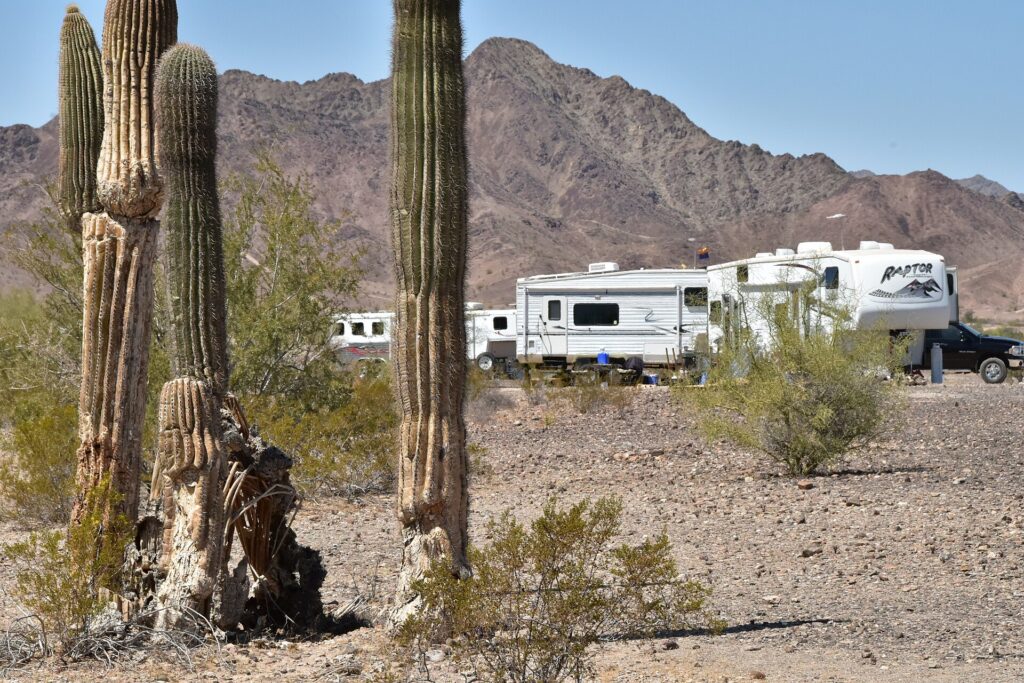
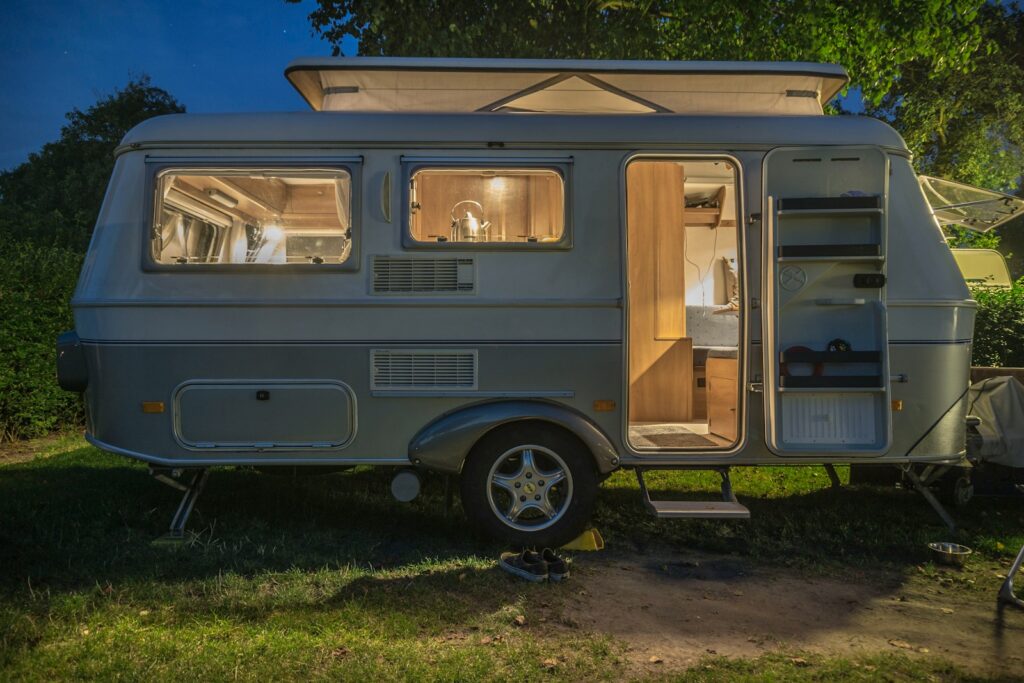
Thank you to the people behind these photos. Hero photo: La Posa Long Term Visitor Area by BLM Arizona (public domain), via Wikimedia Commons; resized. Card photos: San Francisco Peaks by Ana Castillo on Unsplash; Heceta Head Lighthouse by Acroterion (CC BY-SA 4.0), via Wikimedia Commons; camper at dusk by Stephan Widua on Unsplash. Brand names are trademarks of their owners.
Affiliate disclosure
As an Amazon Associate, RV-Roundup earns from qualifying purchases. The “See it on Amazon” buttons and product links on this page are affiliate links; if you buy through one, we receive a small commission from Amazon at no additional cost to you. That commission is what keeps this site free. No manufacturer paid to be on this page.
Sources we checked on November 2, 2026: CDC (heat illness), AVMA (pets in vehicles), National Weather Service (Phoenix and Flagstaff July normals), and manufacturer specifications from Progressive Industries, Micro-Air, MAXXAIR, Reflectix and Camco.
Use your judgment. Follow your RV, air conditioner and appliance manufacturers’ instructions, have electrical and rooftop work done by a qualified technician if you are not comfortable doing it, and take care on ladders and roofs. Product details and prices can change at any time. This page is general information, not medical, electrical or professional advice; RV-Roundup is not responsible for errors, omissions or changes made after publication.