RV Tips · Trip Budget · 30 ways to save
Best Ways to Save Money on Your Next RV Road Trip
Fuel, campsites and food eat most of an RV trip budget. These are the savings that actually move the number: smarter driving, fuel discounts, free and cheap camping, easy camp meals and the memberships that pay for themselves, plus a calculator to see what they are worth on your trip.
Gas today
$4.17
AAA national average, Nov. 2
Private RV site
$73/night
U.S. average, June 2026
Public campground
$34/night
U.S. average, June 2026
Free camping
14 nights
In 28 days on most BLM land
Prices and rules checked November 2, 2026 · By RV-Roundup
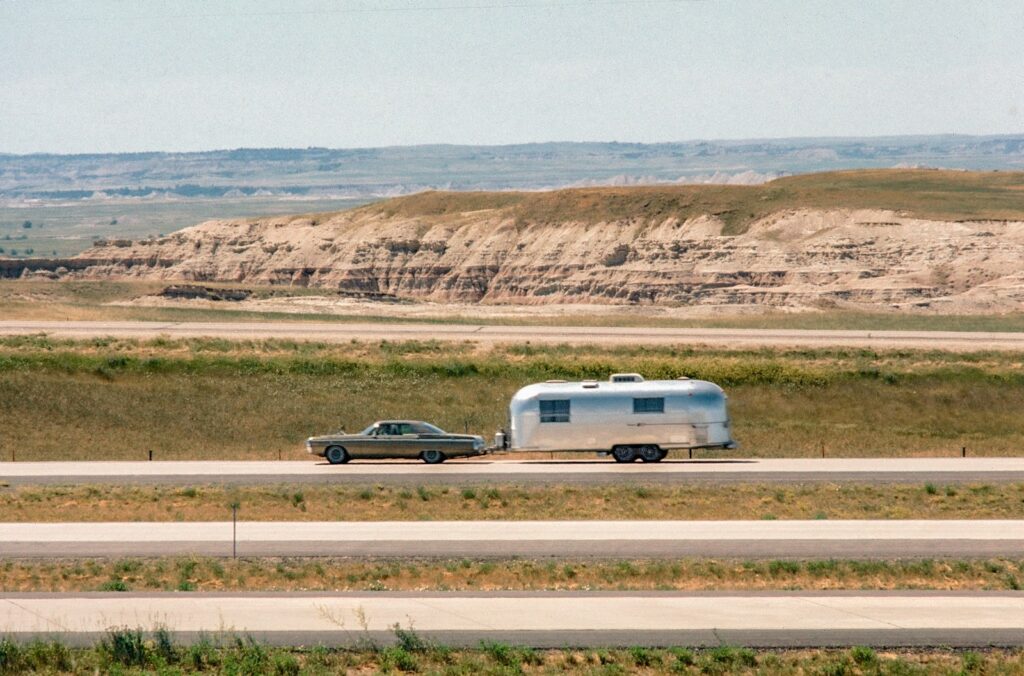
Photo: Lewis J Goetz on Unsplash
Biggest single saving
Camp free on public land
At a glance
Six quick wins for any RV trip
Short on time? Start here. Each card jumps to the full tip further down the page.
Biggest fuel saver
Drive 5 to 10 mph slower
Each 5 mph over 50 costs about 7% in fuel economy. At 10 mpg, cruising at 60 instead of 70 saves roughly $100 every 2,000 miles.

Best free app
Compare fuel prices first
Prices often vary 20 cents or more a gallon within a short drive. Check before you pull off the interstate.

Best for diesel
Get the Open Roads card
Free to join. Members average 40 to 50 cents off a gallon of diesel at participating truck stops.

Best free camping
Boondock on public land
Most BLM land allows free dispersed camping for up to 14 days in any 28-day period.

Best food saver
Cook two meals a day at camp
Breakfast at camp and a packed lunch cost a fraction of two restaurant stops. Save eating out for one great local meal.

Best memberships
Harvest Hosts + Passport America
$148 a year for free overnight stays and 50% off campgrounds. Each can pay for itself in about two nights.
The short answer
The biggest savings on an RV road trip come from three places: drive 60 to 62 mph instead of 70 and keep your tires properly inflated, mix free or public campsites in with private parks (public campgrounds averaged $34 a night in June 2026, against $73 for private RV sites), and cook most meals in your rig. Add a free fuel-price app, a diesel discount card if you drive diesel, and one or two memberships that match how you travel, and a two-week trip can easily cost several hundred dollars less.
Know your numbers
Where your RV trip money goes
Most RV trip budgets come down to four buckets. Fuel and campsites are usually the big two, so that is where the biggest savings are.
Fuel
At $4.17 a gallon and 10 mpg, every 1,000 miles costs about $417. Diesel set record highs above $6 a gallon in September 2026.
Biggest levers: speed, tire pressure and where you fill up
Campsites
Private RV sites averaged $73.20 a night in June 2026, so two weeks of private parks runs about $1,000.
Biggest levers: free and public camping, longer stays, discount clubs
Food
Eating every meal out can rival your campsite bill. Your RV kitchen is the easiest place on the trip to cut.
Biggest levers: a simple meal plan, big grocery runs, one-pot dinners
Everything else
Tolls, propane, dump fees, park entry, laundry and repairs. Small on their own, they add up over a long trip.
Biggest levers: route choice, park passes, basic maintenance
Do the math
RV trip budget calculator
Slide in your trip, then turn on the savings that fit how you travel. You will see an estimated trip cost and how much the changes could save.
Estimated savings
$0off your trip
| Cost | Before | After |
|---|---|---|
| Fuel | $0 | $0 |
| Campsites | $0 | $0 |
| Food | $0 | $0 |
| Total | $0 | $0 |
That is $0 a night with your savings.
Estimates only. Fuel price defaults to the AAA national average for regular on November 2, 2026, and campsite rate to the June 2026 average for private RV sites. The slower-driving setting uses the U.S. Department of Energy rule of thumb that each 5 mph over 50 mph lowers fuel economy about 7%. Your rig, terrain and weather will change the numbers.
Fuel
Spend less at the pump
Fuel is the biggest line in most RV budgets, and with gas at $4.17 a gallon nationally and diesel near record highs, every mile per gallon counts. Start with the free habits, then add the discounts.
Free Every rig

Biggest fuel saver
Slow down to 60–62 mph
Each 5 mph over 50 mph lowers fuel economy about 7% (U.S. Department of Energy) · Costs nothing
Wind resistance climbs fast with speed, and an RV is a big flat wall pushing through the air. The U.S. Department of Energy’s rule of thumb is that each 5 mph you drive over 50 mph lowers fuel economy by about 7%. At today’s $4.17 average, that is like paying roughly 29 cents more a gallon for every 5 mph. Many trailer tires are speed-rated for only 65 or 75 mph too, so a steady 60 to 62 saves fuel and is easier on the whole rig. Use cruise control on flat highway, ease off it on long climbs, and accelerate gently from stops and on-ramps.
What it saves
- Roughly $100 per 2,000 miles at 10 mpg, going 60 instead of 70
- Less tire heat and brake wear
- Calmer handling in crosswinds
Keep in mind
- Adds about 15 minutes per 100 miles (60 vs. 70 mph)
- Keep up with traffic where going slower is not safe
Best for: Every RVer on every trip. It is the one saving that costs nothing.
Free apps Gas + diesel

Best free app
Compare prices before you pull off
GasBuddy for prices · Pilot, Love’s and Open Roads apps for truck stops · All free
Fuel prices can vary by 20 cents or more a gallon within a short drive, and the station right at the interstate exit is rarely the cheapest. Check GasBuddy a tank ahead, then pick a stop you can get in and out of with your rig. On long routes, fill up before you cross into a higher-priced state, or wait until you are across a cheaper state line. Keep big-rig access in mind: a cheap station is not a bargain if you have to unhook the tow car to get back out.
What it saves
- Live, driver-reported prices
- Filters for diesel and station amenities
- Works with any rewards card you already carry
Keep in mind
- Prices can be a few hours old
- The cheapest pump may not fit a big rig
Best for: Gas rigs and tow vehicles, on every fill-up.
Free card Diesel

Best for diesel
Open Roads diesel discount card
Free to join · Members average 40–50¢ off a gallon at 3,000+ truck stops · Keeps 10% of what you save
Open Roads gives RVers the fleet pricing trucking companies pay for diesel. You apply online, get a fuel card in the mail and use the app to see the discounted price at participating truck stops, such as Love’s and TA, before you pull in. Joining is free; the program keeps 10% of whatever you save. Discounts vary by stop and region, so compare the Open Roads price with GasBuddy, and plan to fuel in the truck lanes, where the discount applies. Harvest Hosts members can now see Open Roads diesel stops right on the Harvest Hosts map.
What it saves
- No sign-up or monthly fees
- App shows the discounted price before you stop
- About $90 saved on 200 gallons at a 45-cent discount
Keep in mind
- Diesel only, at participating truck lanes
- Not accepted at Pilot or Flying J
- Savings vary a lot from stop to stop
Best for: Diesel pushers and diesel trucks towing fifth wheels or travel trailers.
Free–$39/yr Gas + diesel

Stack the small savings
Truck stop rewards and Good Sam
Good Sam: 5¢ off gas and 8¢ off diesel at Pilot Flying J · Free Pilot and Love’s rewards apps
Truck stop loyalty programs will not make headlines, but they add up on a long trip, and the apps are free. Pilot Flying J’s myRewards app runs regular per-gallon deals, and a Good Sam membership ($39 a year) takes 5 cents off gas and 8 cents off diesel at participating locations, plus small discounts on propane and dump stations. Love’s Connect earns points toward fuel, food and showers. Pay with a credit card that gives cash back on fuel and you can stack two or three discounts on a single fill-up.
What it saves
- Pilot and Love’s apps cost nothing
- Good Sam adds propane and dump-station discounts
- Stacks with a cash-back card
Keep in mind
- A few cents off will not beat a cheaper station down the road
- Read the fine print on app offers
Best for: RVers who stop at truck stops anyway for easy big-rig access.
About $14 Every rig

Maintenance that pays
Check tires, weight and idling
Correct tire pressure: up to 3% better mileage · Every extra 100 lb: about 1% worse
Under-inflated tires waste fuel, wear out early and run hot, which is how many blowouts start. The Department of Energy says correct pressure improves mileage by 0.6% on average and up to 3%, and every 1 psi low across all tires costs about 0.2%. Check pressure cold, before you drive, with a gauge that reads high enough for RV tires. Travel with the fresh-water tank low and the gray and black tanks empty when you can fill and dump at your destination; water weighs about 8.3 pounds a gallon. And skip long idles: an idling engine can burn a quarter to half a gallon an hour, depending on its size.
What it saves
- A $14 gauge pays for itself quickly
- Safer tires and fewer roadside calls
- A lighter rig brakes and climbs better
Keep in mind
- Inflate to your tire load chart or placard, not just the sidewall maximum
- Only dump tanks where it is allowed
Best for: Every rig, before every travel day.
Free and cheap camping
Cut your campsite bill
Private RV parks averaged $73 a night in June 2026. Mixing in free, public and discounted stays is the fastest way to bring that number down.
Free Mostly western US
Biggest single saving
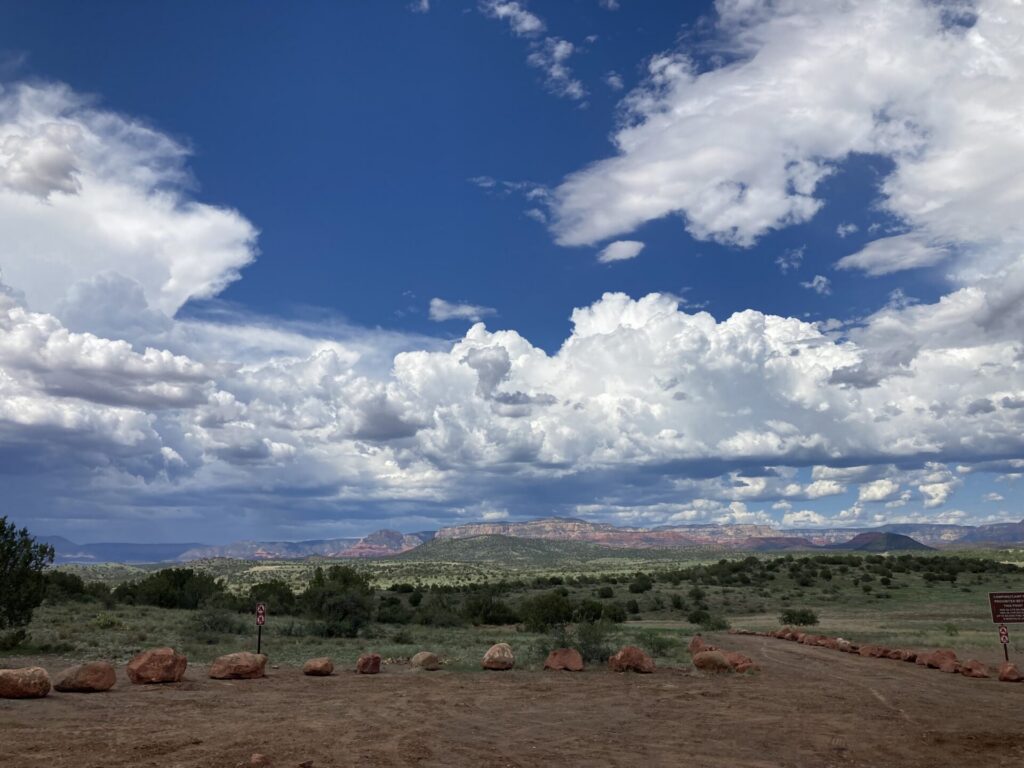
Boondock on BLM and national forest land
Free · Usually up to 14 days in any 28-day period · No hookups
Much of the public land in the West is open to free dispersed camping, often called boondocking. The Bureau of Land Management allows it on most of its land unless an area is posted closed, generally for up to 14 days within any 28-day period, after which you move on (often at least 25 miles). National forests have similar rules. There are no hookups, so arrive with a full fresh-water tank, empty holding tanks and a plan for power. We cover several favorites, including Plomosa Road near Quartzsite, Craggy Wash near Lake Havasu City and the West Sedona designated dispersed area.
What it saves
- $0 a night, often with big views
- Room between neighbors
- Up to two weeks in one spot
Keep in mind
- No water, sewer or power
- Stay limits vary by field office; check before you go
- Some roads are rough for big rigs
Best for: Self-contained rigs with solar, a generator or a portable power station.
$180 a season Arizona + California
Best winter deal
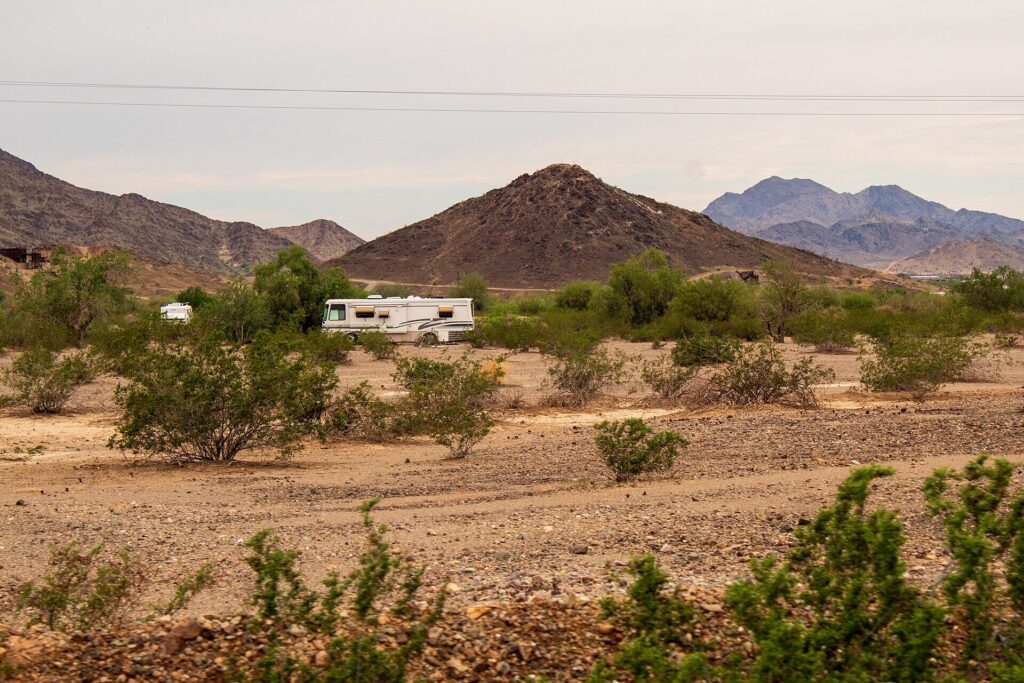
Winter at a Long Term Visitor Area
$180 for Sept. 15–April 15, or $40 for 14 days · 7 LTVAs on one permit
Snowbirds can skip the 14-day shuffle at the BLM’s Long Term Visitor Areas near Quartzsite, Yuma and Blythe. One long-term permit covers the whole season from September 15 to April 15, and you can move between LTVAs without paying again; a short-visit permit covers 14 days. That works out to less than a dollar a night for a full season. La Posa South has trash, potable water and a dump station; most other areas are open desert with services nearby. The BLM has floated much higher LTVA fees in a draft business plan, so confirm the current price before you go.
What it saves
- Less than $1 a night for a full season
- Water, trash and dump at La Posa South
- Move between seven LTVAs on one permit
Keep in mind
- Dry camping only, no hookups
- Desert heat returns by April
- Fees could rise under a proposed BLM plan
Best for: Snowbirds spending a month or more in the desert Southwest.
About $34 a night Nationwide
Best value with a view
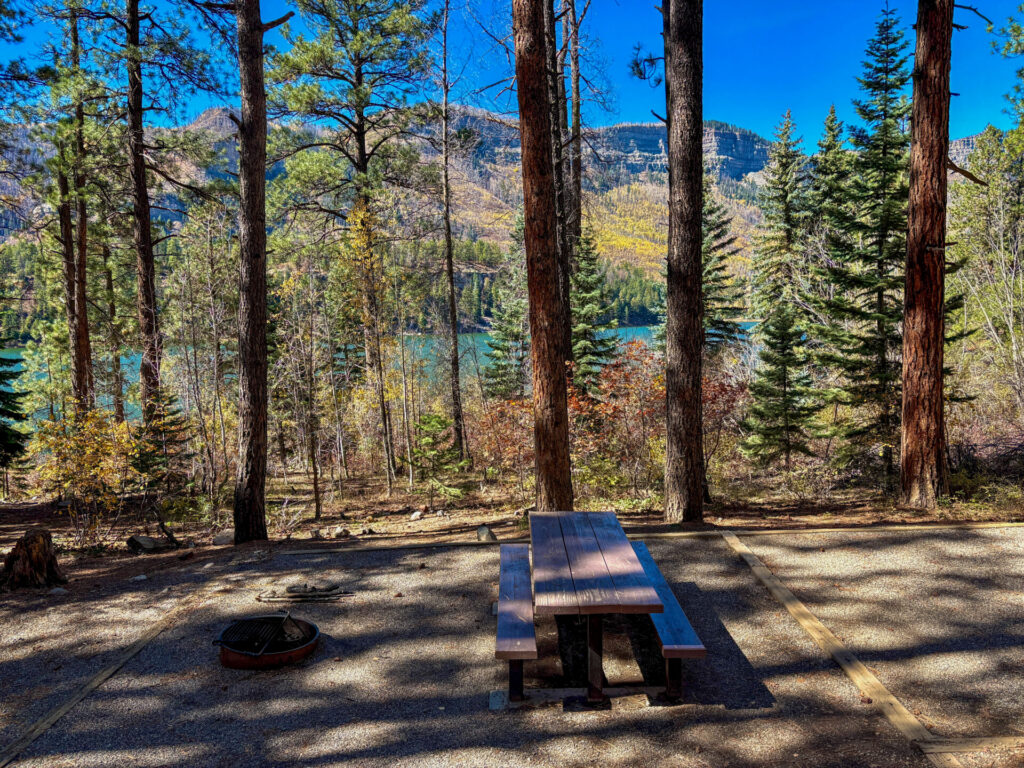
Public campgrounds and the Senior Pass
Public campgrounds averaged $34.12 a night in June 2026 · Senior Pass: 50% off many federal campsites
National forest, Army Corps of Engineers, state park and county campgrounds often sit in the best scenery for about half the price of a private park. The trade-off is fewer hookups and more competition for sites, so book early on Recreation.gov or the state park website, or look for first-come sites midweek. If you are 62 or older, the America the Beautiful Senior Pass ($80 for life or $20 a year) can cut many federal campsite fees in half, though campgrounds run by concessioners do not always honor it. Everyone else can cover national park entry with the $80 annual pass.
What it saves
- About half the price of a private park
- Roomy, wooded sites and great locations
- Senior and Access passes halve many fees
Keep in mind
- Fewer full-hookup sites
- Popular parks book up months ahead
- Some older campgrounds limit rig length
Best for: Anyone happy with water-and-electric or dry camping for a few nights.
Free–$99/yr Travel days
Best for travel days
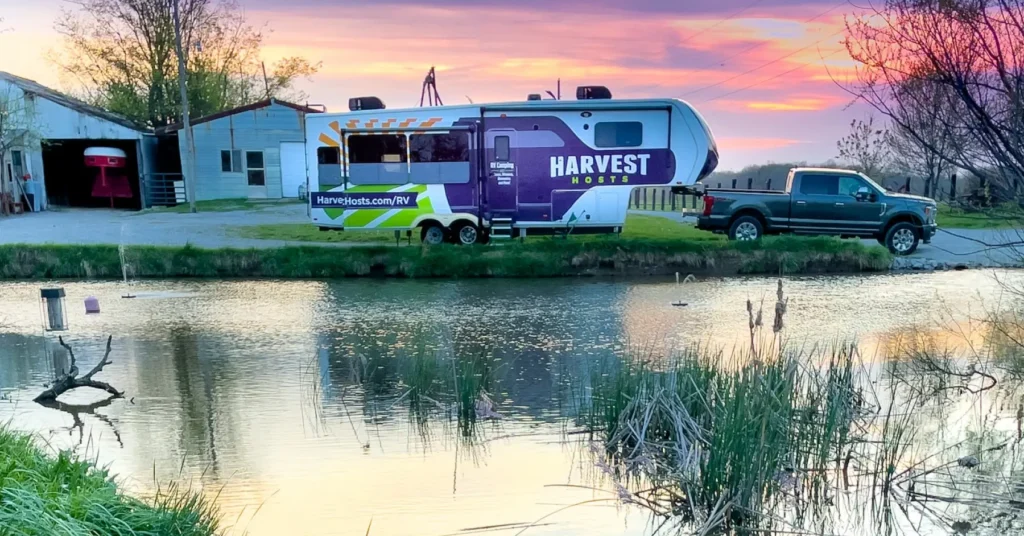
Free overnight stops between destinations
Harvest Hosts from $99 a year · Some Walmart stores, rest areas and truck stops where posted rules allow
On a travel day you only need a safe, level place to sleep, not a pool and a clubhouse. Harvest Hosts ($99 a year) opens up free one-night stays at more than 9,500 wineries, farms, breweries and attractions; it is good manners to buy something. Some Walmart stores still allow overnight RV parking, but it is up to each store manager and local law, so call ahead or ask inside, stay one night and keep slide-outs, chairs and grills put away. Rest areas, truck stops and some casinos are other options where posted rules allow.
What it saves
- Free or nearly free nights on long hauls
- Memorable stops at farms and wineries
- No campground booking needed
Keep in mind
- One night, usually without hookups
- Walmart rules vary store by store
- Always ask permission first
Best for: Long travel days between destinations.
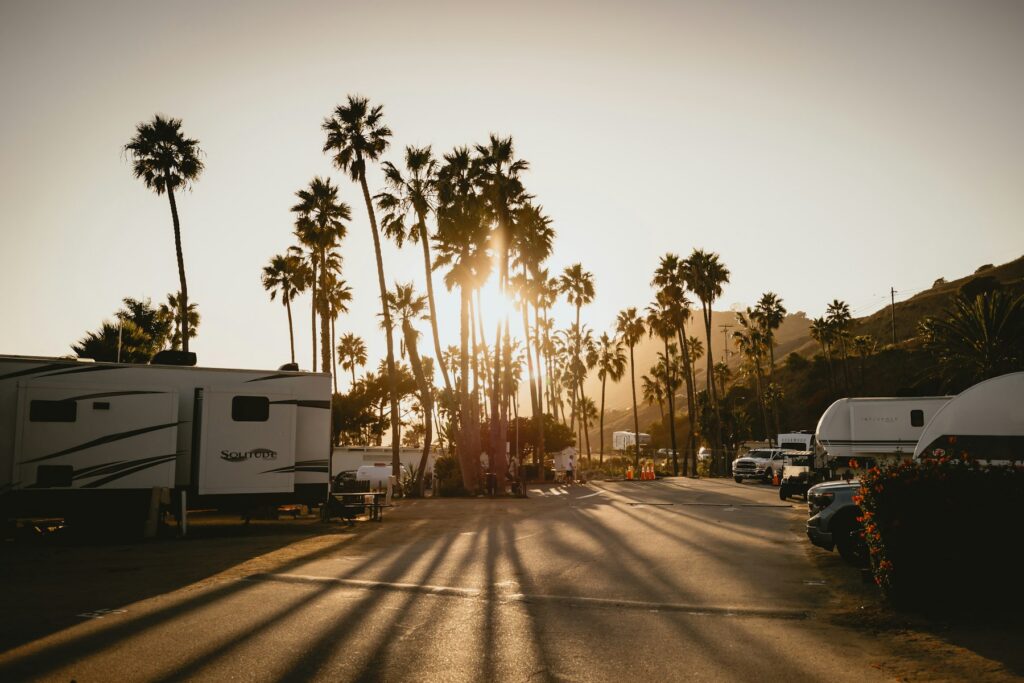
Up to 50% off Private parks
Best for slow travel
Stay longer and use a discount club
Weekly and monthly rates · Passport America: 50% off for $49 a year · Good Sam and KOA Rewards: 10% off
The cheapest miles are the ones you do not drive. Staying a week or a month in one park usually unlocks a lower nightly rate, even when it is not advertised, so ask when you book. For short stops, Passport America ($49 a year) takes 50% off at participating campgrounds, and two discounted nights at a $70 park more than cover the fee. Good Sam and KOA Rewards each take 10% off at their parks. Do not count on the off-season alone, though: a 2026 industry pricing report found location now matters more than timing at many private parks.
What it saves
- Lower nightly rates and fewer fuel stops
- More time exploring, less time driving
- Discount clubs pay off in a night or two
Keep in mind
- Monthly stays may add a metered electric bill
- Discount nights are often capped and blacked out on holidays
Best for: Snowbirds, full-timers and anyone with time to slow down.
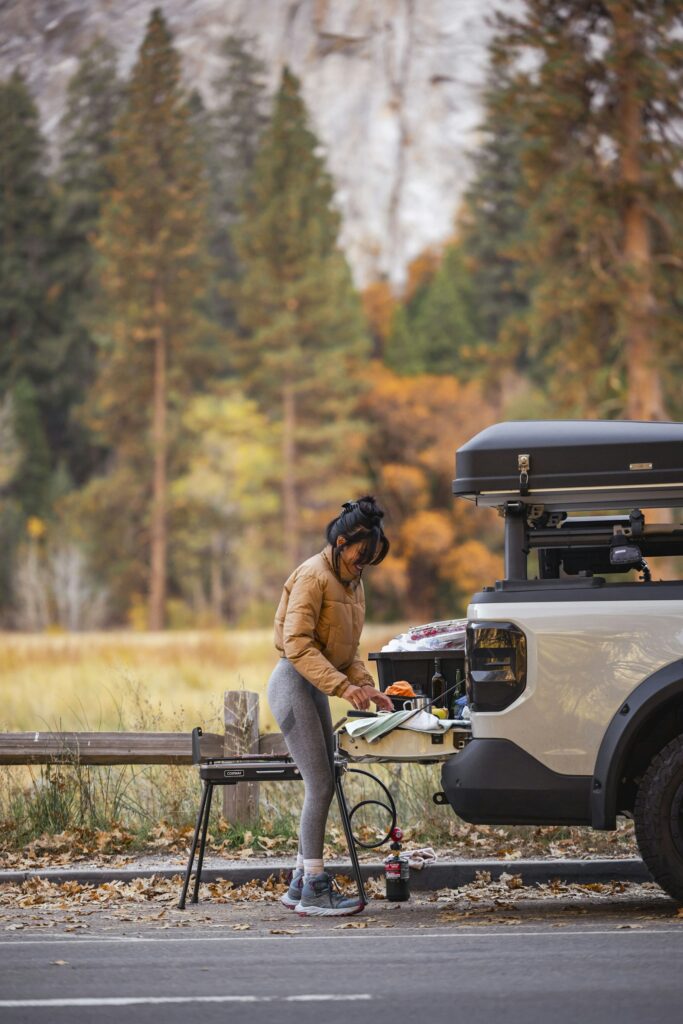
Eat well for less
Save on food without living on hot dogs
Your RV kitchen is the easiest money saver on the trip. Four simple habits do most of the work.
1
Plan meals, then shop once
Write a simple menu for the first three or four days and stock up at a full-size grocery store. Campground stores and tourist-town markets charge more for the same food.
2
Cook breakfast, pack lunch
A hot breakfast at camp and a packed lunch for the road cover two meals for less than one restaurant stop. Keep snacks and drinks within reach so convenience-store runs do not add up.
3
Lean on one-pot dinners
Chili, pasta, sheet-pan meals and an Instant Pot stretch groceries and save propane. Our RV cookbook picks are full of small-kitchen ideas.
4
Budget for one great local meal
Eating out is part of the fun. Pick one standout spot per stop from our Places to Eat guides and enjoy it guilt-free.
Everything else
More ways to spend less on the road
The smaller line items add up over a long trip. These are the ones worth a minute of planning.
Plan around tolls
RVs and trailers often pay higher tolls because of extra axles, and pay-by-plate billing usually costs more than a transponder. Check your route for toll roads before you leave.
Saves: axle surcharges and mail-in fees
Refill propane by the gallon
Filling your tanks at a propane dealer or travel center usually costs less than swapping cylinders, and you pay only for what you need. Good Sam members save a little more at Pilot Flying J.
Saves: exchange markups
Use free dump stations
Many rest areas, travel centers and state parks offer free or low-cost dump stations. Campground and fuel apps show where they are along your route.
Saves: $10 to $20 a dump
Maintain before you go
A blown tire or a roadside tow can cost more than a week of camping. Check tires, lug nuts, roof seals, batteries and fluids before every big trip.
Saves: breakdowns and repair bills on the road
Buy the pass, not the ticket
If you will visit three or more fee-charging national parks this year, the $80 America the Beautiful pass usually beats paying at each gate. Many states sell annual park passes too.
Saves: entrance fees all year
Plan shorter loops
Fewer, longer stays beat a dash across the country. A loop with shorter travel days and a few multi-night stops burns less fuel and leaves more time to explore.
Saves: fuel and campground turnover
Find free things to do
Hiking trails, scenic drives, beaches, visitor centers and free museum days fill a trip without ticket costs.
Saves: admission fees
Trade work for a site
Workamping jobs at campgrounds, parks and attractions often include a free full-hookup site, and many pay an hourly wage too.
Saves: campsite fees on long stays
Do they pay for themselves?
Memberships and passes that save RVers money
Only buy what fits how you travel. Here is what each one costs and roughly when it pays off at a $73 campground. Swipe sideways on a phone.
| Program | Yearly cost | What you save | Pays off after | Best for |
|---|---|---|---|---|
| Harvest Hosts | $99 | Free one-night stays at 9,500+ hosts | About 2 nights | Travel days |
| Boondockers Welcome | $79 | Free stays on private property, many with hookups | About 2 nights | Free multi-night stays |
| Passport America | $49 | 50% off at 1,100+ campgrounds | About 2 discounted nights | Short stops |
| Good Sam | $39 | 10% off at 2,000+ campgrounds, plus fuel, propane and dump discounts | About 6 nights (sooner with fuel) | Pilot Flying J regulars |
| KOA Rewards | $39 | 10% off at 500+ KOAs, plus points toward free nights | About 6 nights | KOA families |
| America the Beautiful | $80 ($20–$80 for seniors) | Entry to national parks and federal lands; Senior Pass halves many campsite fees | About 3 park visits | National park trips |
| Open Roads | Free | Average 40–50¢ off a gallon of diesel | First fill-up | Diesel rigs |
Before you go
10-minute money check before every trip
Run through this list the week before you leave and the savings take care of themselves.
- Set a trip budget. Add up fuel, nights and food with our calculator, then track spending in a notes app as you go.
- Map your fuel stops. Check GasBuddy or Open Roads along the route and fill up before pricey stretches.
- Mix your campsites. Line up a few free or public nights between private parks.
- Book busy places early. Popular parks and holiday weekends fill months ahead, and last-minute sites cost the most.
- Ask about weekly and monthly rates. Many parks discount longer stays without advertising it.
- Stock the pantry first. Shop at home or a full-size grocery store on day one, not at the campground store.
- Check tire pressure and lug nuts. Cold, before you drive, on every tire, including the spare.
- Travel light. Empty the holding tanks and carry only the fresh water you need until your next fill.
- Pack your cards. Keep membership, fuel and park pass cards together so you actually use them.
- Plan a few free days. Hikes, scenic drives and visitor centers cost nothing and make great memories.
Do not save in the wrong places
Skipping tire replacement, brake service or roadside assistance to save money can backfire with one tow bill that wipes out a season of savings. Never overnight where it is posted no camping, and do not run a generator or propane heater without working carbon monoxide and propane detectors.
Gear for the road
Gear that pays for itself
A few inexpensive tools make the savings above easier: right-size your tire pressure, camp off-grid with confidence and cook more meals in your rig.
Milton ACCU-GAGE tire pressure gauge (0–160 psi)
Reads high enough for RV tires, so you can keep every tire at the right pressure for better mileage and safer travel.
Check price on Amazon: Milton ACCU-GAGE tire pressure gauge (0–160 psi) (opens in a new tab)

Mopeka Pro Check propane sensor
Know how much propane is left before a run of free boondocking nights, so you refill on your schedule.
Check price on Amazon: Mopeka Pro Check propane sensor (opens in a new tab)
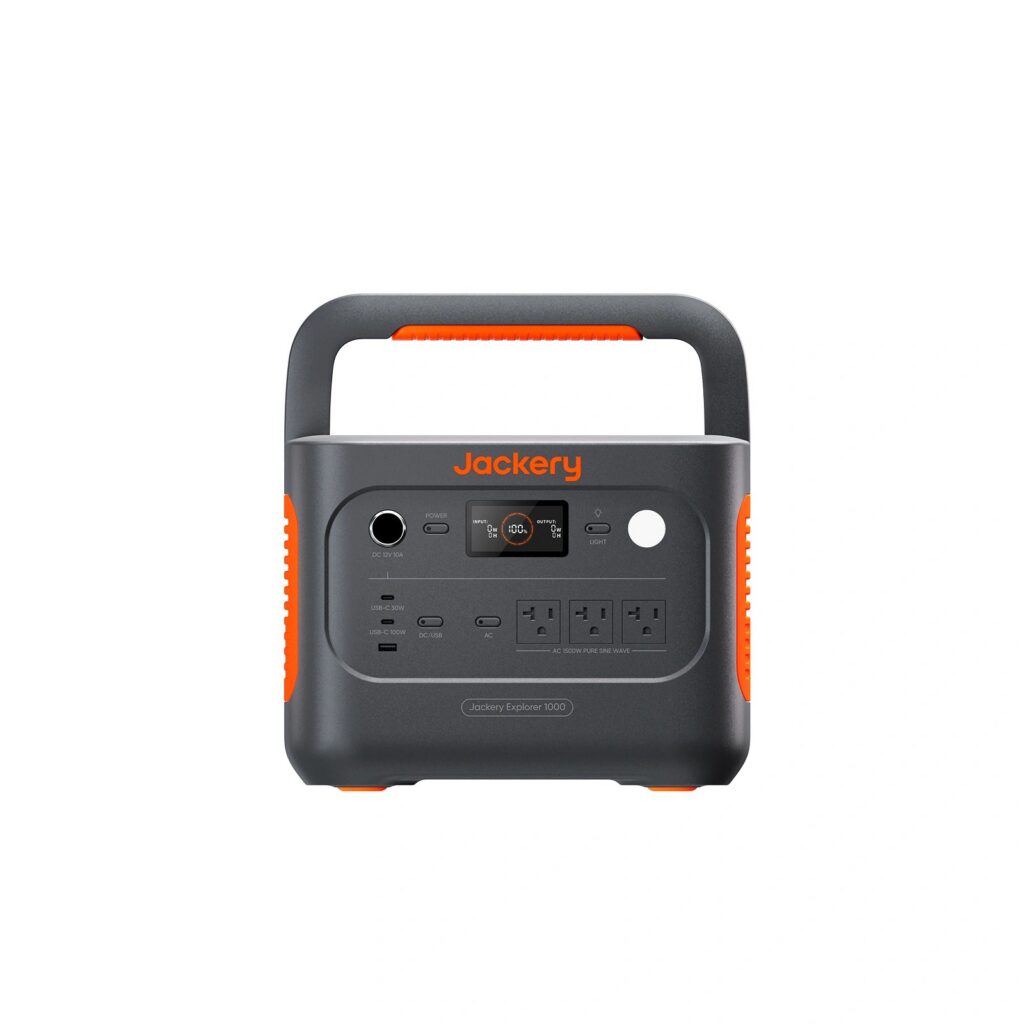
Jackery Explorer 1000 v2 power station
Quiet battery power for no-hookup nights on public land and at host stays, instead of paying for an electric site.
Check price on Amazon: Jackery Explorer 1000 v2 power station (opens in a new tab)
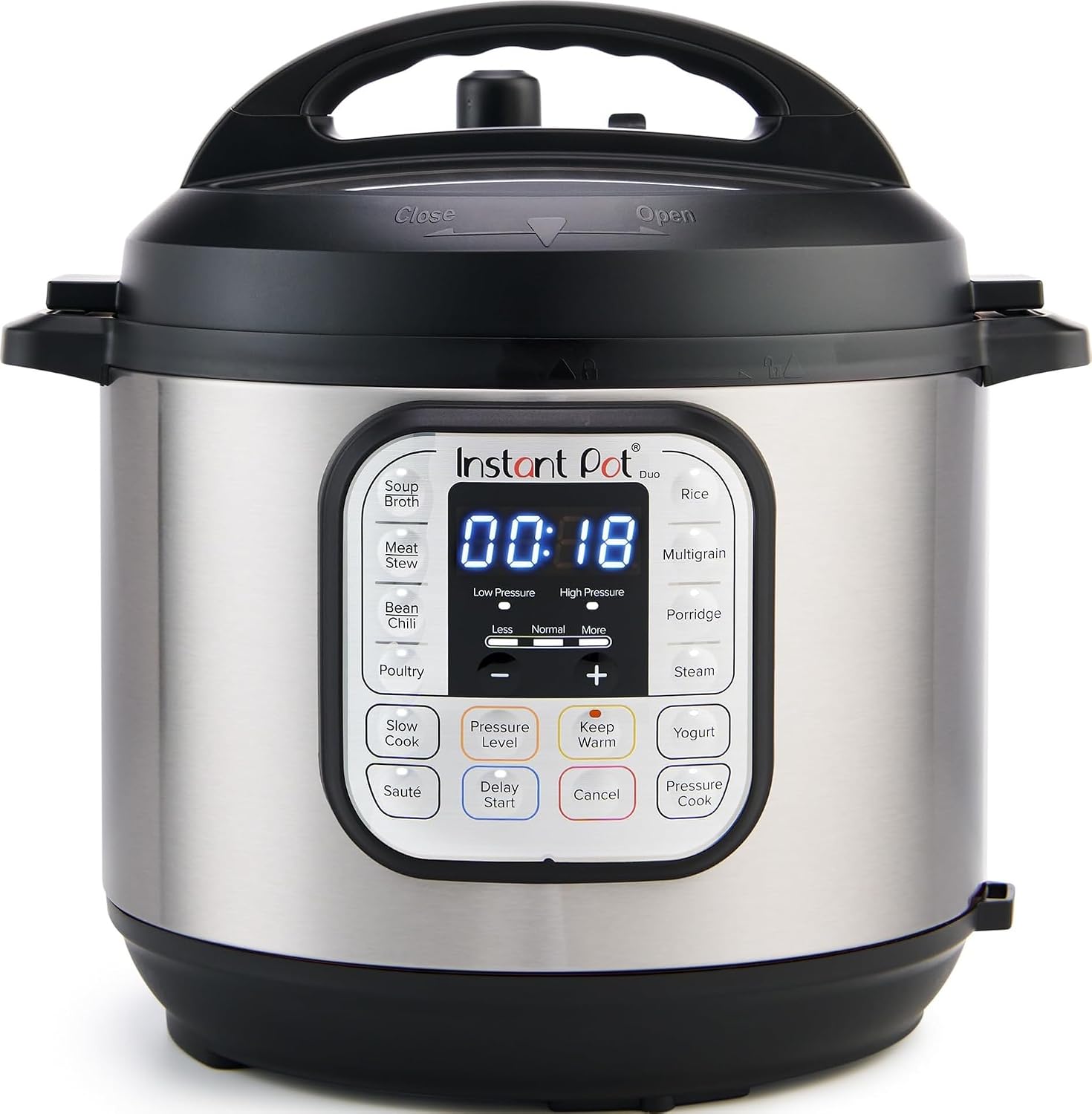
Instant Pot Duo 6 Qt pressure cooker
One pot for chili, stews, rice and pasta on shore power, so cooking at camp is as easy as eating out.
Check price on Amazon: Instant Pot Duo 6 Qt pressure cooker (opens in a new tab)

Lodge 10.25-inch cast iron skillet
Works on the stove, the grill or over the campfire. An inexpensive pan that lasts for decades.
Check price on Amazon: Lodge 10.25-inch cast iron skillet (opens in a new tab)
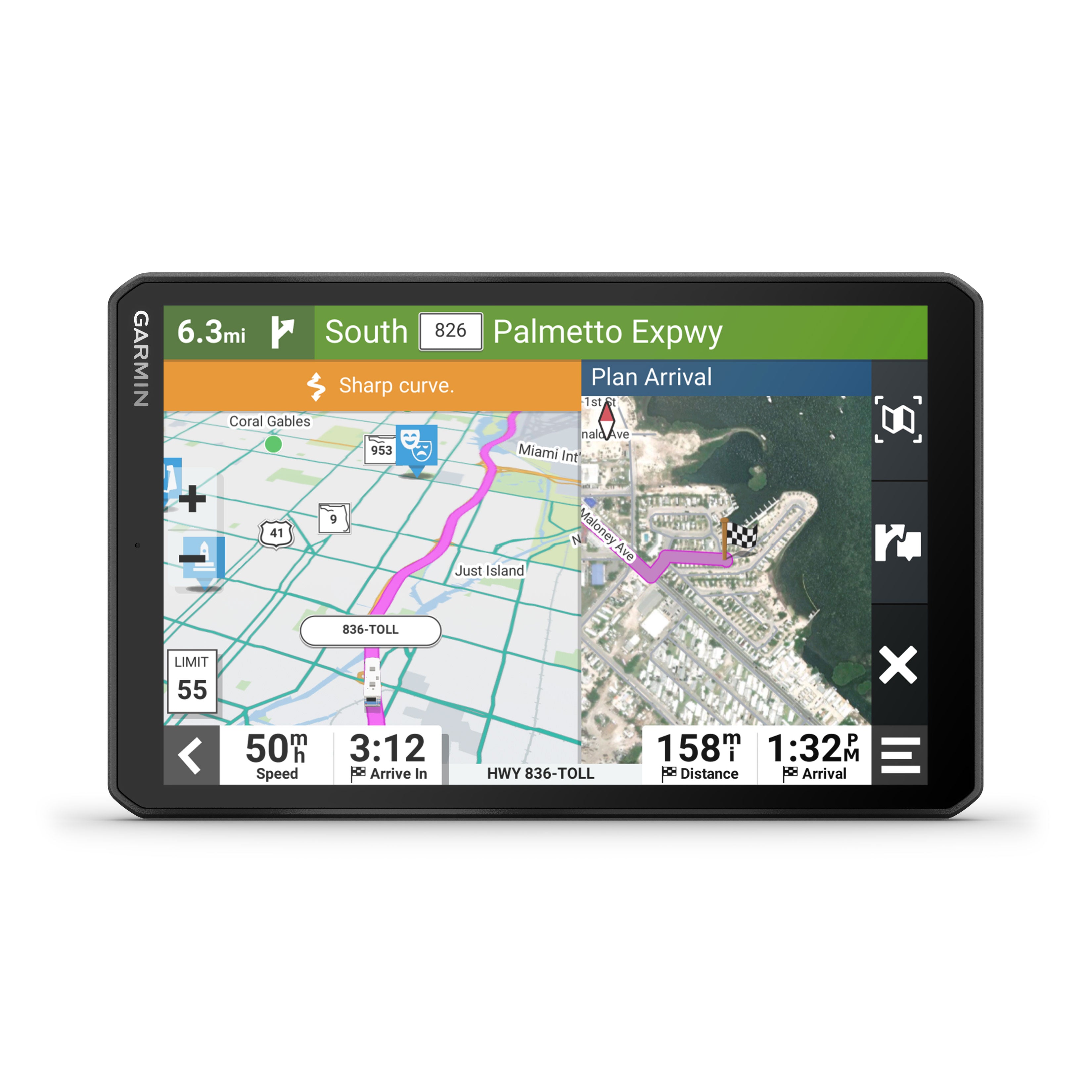
Garmin RV 895 RV GPS navigator
Routes around low bridges and weight limits for your rig, so you avoid costly wrong turns and detours.
Check price on Amazon: Garmin RV 895 RV GPS navigator (opens in a new tab)
As an Amazon Associate, RV-Roundup earns from qualifying purchases. Prices change often; check the current price on Amazon.
Keep exploring
More RV trip planning guides
Guides we have built to help you plan the rest of the trip.
Best RV Campground Memberships: Compare Costs & Benefits
13 memberships compared on price, network and fine print, with a savings calculator.
Read the guide: Best RV Campground Memberships: Compare Costs & Benefits
Best RV Apps for Planning, Traveling & Camping
The apps we use for routing, campgrounds, fuel prices and cell signal.
Read the guide: Best RV Apps for Planning, Traveling & Camping
Essential RV Kitchen Accessories
Cook more meals in your rig with gear that fits a small kitchen.
Helpful answers
RV road trip budget questions, answered
What readers ask us most about saving money on an RV trip.
Start here
Run your trip numbers
Slide in your miles, nights and food budget to see what your trip will cost, and how much these tips could save.
Thank you to the people behind these photos. Hero photo by Lewis J Goetz on Unsplash (opens in a new tab); other photos by Benjamin Zanatta, Leo_Visions and Kevin Schmid, also on Unsplash. The La Posa photo is from BLM Arizona (public domain), and the West Sedona and Haviland Lake photos are from the U.S. Forest Service (public domain). The Harvest Hosts photo is courtesy of Harvest Hosts. App icons are shown to identify each app and remain trademarks of their owners. Product photos are from the manufacturers and Amazon.
How we made this guide
We checked every number on this page on November 2, 2026: fuel prices from the AAA national average (opens in a new tab), campground rates from Insider Perks’ Outdoor Hospitality Pricing Index (opens in a new tab) (June 2026), fuel-economy guidance from the U.S. Department of Energy’s fueleconomy.gov (opens in a new tab), camping rules from the Bureau of Land Management (opens in a new tab), pass prices from the National Park Service (opens in a new tab), and discounts from each program’s own website. No company paid to be included. Prices, discounts and rules change often, so confirm the details before you go.
RV-Roundup is a participant in the Amazon Services LLC Associates Program. As an Amazon Associate we earn from qualifying purchases. Product links in the gear section are affiliate links; links to apps, memberships and government sites are not. Product prices were checked in October 2026.